5 Hurricane Wind Ratings Tips for Houston Patio Covers
Hurricane wind ratings describe how much wind force an aluminum patio cover is designed to resist. In Houston, the correct rating depends on local building codes, exposure, roof shape, connections, and engineering—not a simple miles-per-hour claim. Ask your contractor for site-specific calculations, permits, product documentation, and installation details before construction.
Why do hurricane wind ratings matter in Houston?
Houston is not on the coast everywhere, but the region can experience tropical storms, hurricanes, straight-line winds, and powerful thunderstorms. A patio cover attached to your home must transfer wind forces safely through several connected parts:
- The roof panels and supporting beams
- Posts, brackets, and fasteners
- The ledger or attachment point at the house
- Footings and the soil below each post
- The existing wall, fascia, slab, or foundation
A strong-looking cover can still perform poorly if one connection is undersized or installed into the wrong material. Wind does not push only downward. It can create uplift, lateral pressure, twisting, and suction around roof edges.
That is why a professional patio cover design should be evaluated as a complete structural system rather than judged by the thickness of one aluminum panel.
What wind load should an aluminum patio cover handle?
Wind load is the pressure or force that wind applies to a structure. It is commonly expressed in pounds per square foot, while wind speed is measured in miles per hour. These numbers are related, but they are not interchangeable.
A design professional considers factors such as:
- The applicable Houston-area building code and adopted wind provisions
- The project’s location and basic design wind speed
- Whether the home is in an open, suburban, wooded, or densely built setting
- The height and size of the patio cover
- Roof slope, openings, and the amount of screening
- The condition and construction of the home where the cover attaches
Two houses only a few miles apart may require different solutions because their exposure, attachment conditions, or local jurisdiction can differ. Your contractor should be able to explain the design assumptions in plain English and identify which portions are supported by manufacturer tables or sealed engineering.
Engineering and permits
Why is site-specific engineering important?
Manufacturer-tested components provide useful starting points, but a Houston patio cover still has to work at your property. Engineering helps confirm that the posts, beams, roof, connections, and foundations work together under expected loads.
Site-specific review is especially important when your project includes:
- A large or unusually wide roof
- A freestanding structure
- A screen room or removable panels
- Attachment to brick veneer, stucco, stone, or older siding
- A second-story connection or elevated deck
- A home with uncertain framing or previous alterations
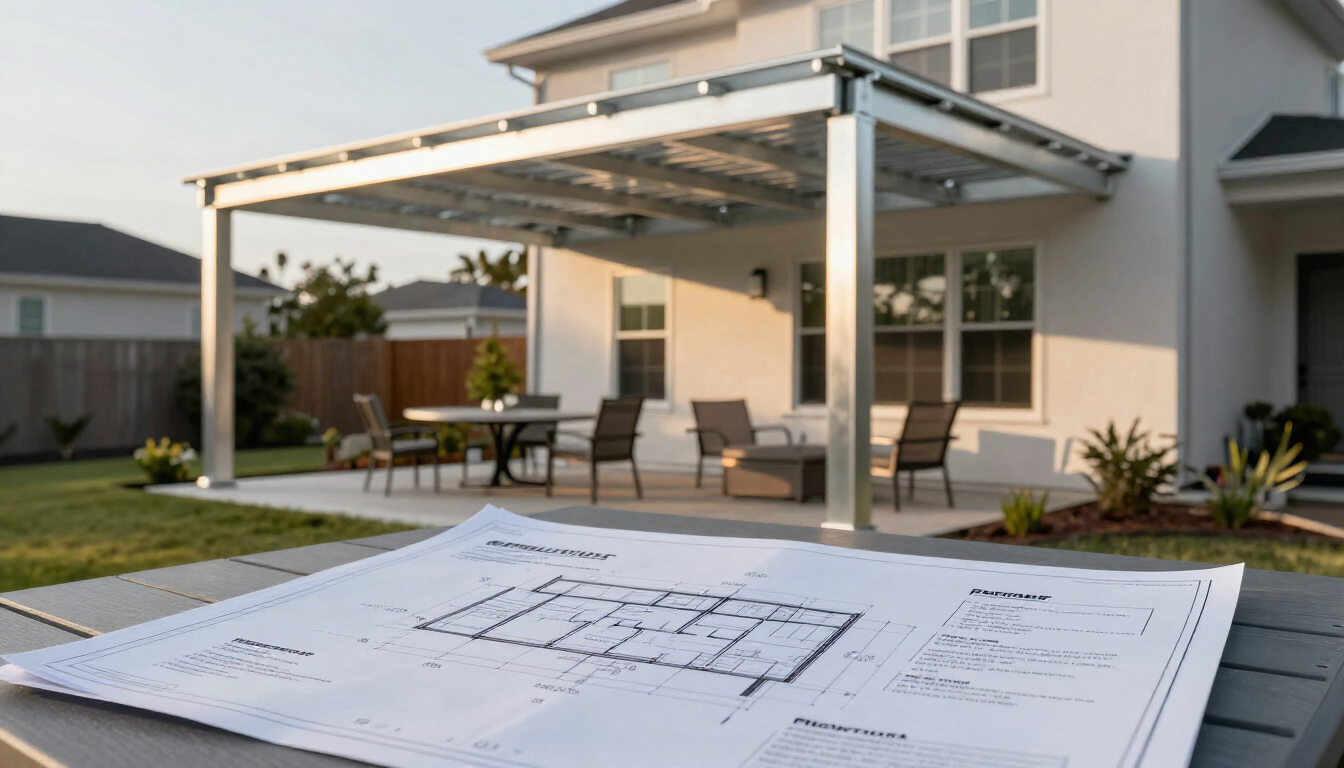
Permitting requirements vary by city and county. A responsible contractor should explain who prepares drawings, who obtains the permit, and whether inspections are included. Do not assume that a product brochure alone satisfies the requirements of your local building department.
How do hail and heavy rain affect aluminum patio covers?
Wind is only one part of Houston weather. Hail can dent exposed surfaces, while heavy rain can reveal problems with drainage, flashing, and roof transitions. Aluminum is naturally resistant to rust and does not rot like wood, but no patio-cover material is damage-proof.
Ask how the proposed system addresses:
- Roof pitch and water runoff
- Gutters, downspouts, and discharge locations
- Flashing where the cover meets the home
- Sealing around fasteners and penetrations
- Hail exposure and available finish or panel options
- Corrosion resistance near pools, sprinklers, or salty air
A patio cover is not automatically a watertight extension of your home. Some open-lattice designs provide shade while allowing rain through. Solid-roof systems offer more weather protection, but their larger surface area can also change wind forces and drainage needs.
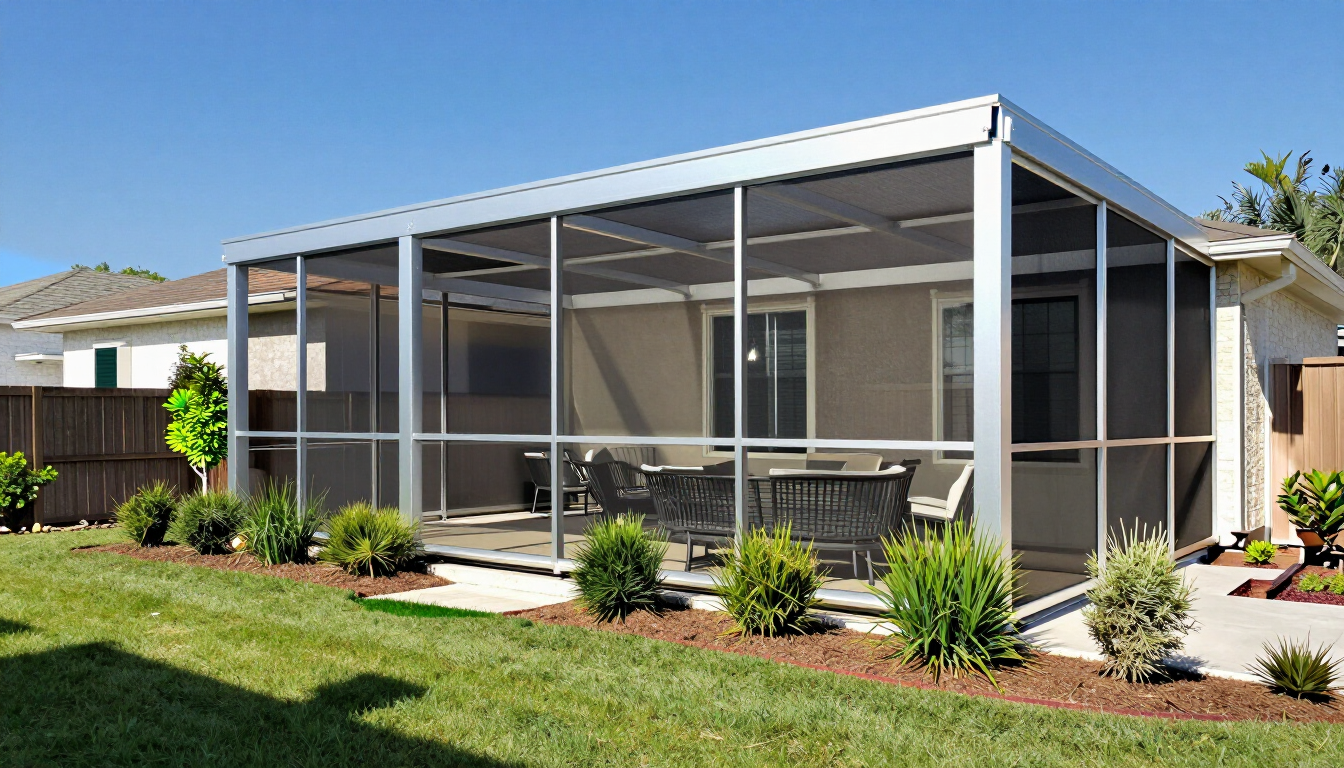
If you want screened protection from insects and rain, compare a solid patio cover with screen rooms and screened porches . The enclosure style can affect both comfort and structural design.
What should you ask your patio cover contractor?
Use these questions during an estimate:
- What wind-load criteria apply to my address and permitting jurisdiction?
- Is the design based on manufacturer specifications, engineering, or both?
- What are the assumed exposure, roof dimensions, and attachment conditions?
- How will the cover connect to my house, and what framing will receive the load?
- Are posts anchored to a suitable footing, slab, or foundation?
- Who handles permits, plans, and required inspections?
- How are hail, heavy rain, flashing, gutters, and drainage addressed?
- What happens if the existing structure cannot support the proposed attachment?
- Which components are covered by product and workmanship warranties?
- Can I see examples of comparable completed projects?
A clear contractor should welcome these questions. Vague promises such as “built for hurricane winds” are less useful than documentation showing the actual design basis for your property.
Choosing the right structure
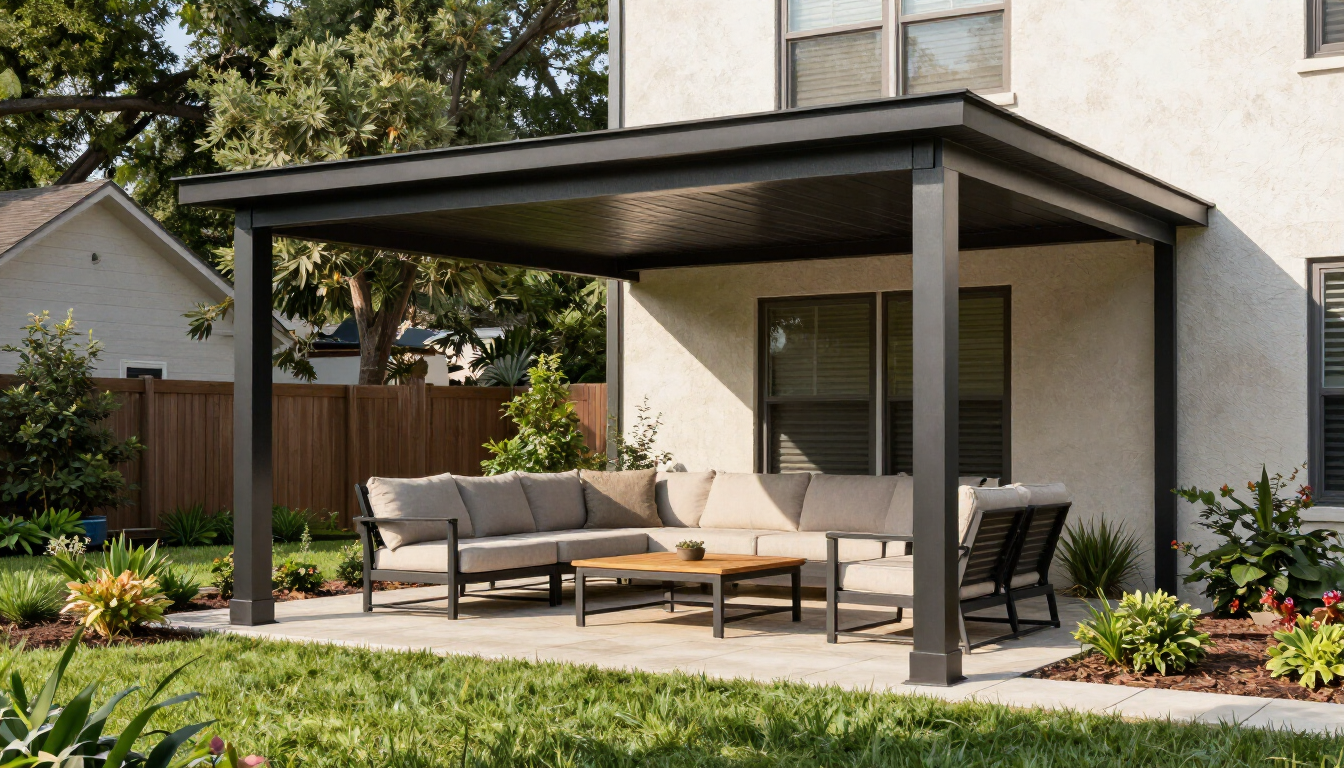
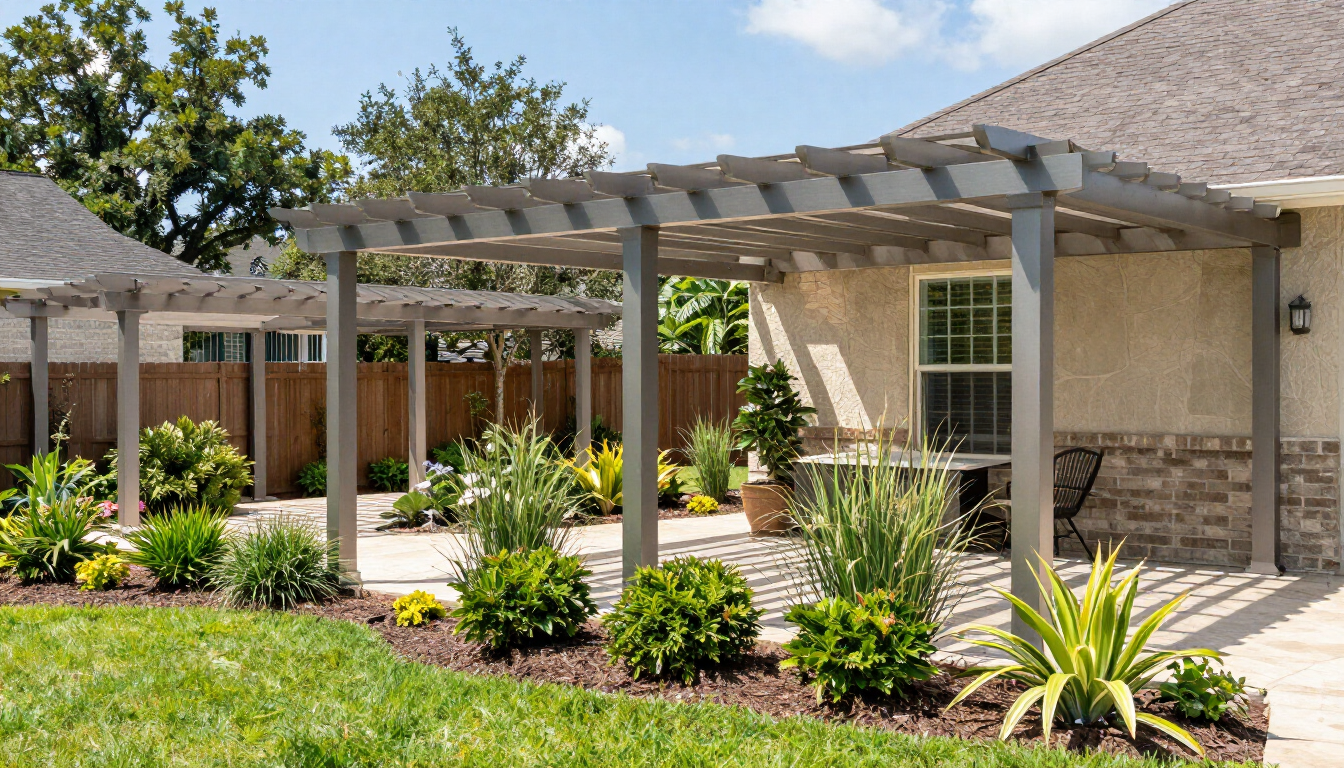
An aluminum patio cover may be a practical option for Houston homeowners who want shade, lower maintenance, and protection from everyday sun and rain. A pergola may be better when airflow and filtered shade are the priority. Explore aluminum pergolas or review pergola FAQs when comparing open-roof designs.
Look beyond the advertised wind speed. Evaluate the entire system, including:
- Structural calculations and connection details
- Materials, coatings, and corrosion resistance
- Drainage and flashing
- Permit responsibility
- Contractor experience and references
- Warranty terms and maintenance expectations
Photos can help you compare layouts and finishes; browse patio photos and recent projects for ideas before requesting a consultation.
Final takeaway
Hurricane wind ratings for aluminum patio covers are meaningful only when they match your Houston-area address, structure, exposure, and installation details. Wind load, uplift, house connections, footings, hail, and heavy rain all deserve attention. Before choosing a design, ask for the engineering or manufacturer documentation, confirm permit responsibilities, and understand how water will drain away from your home. Then compare the complete system—not just the roof material or a headline wind-speed number. A qualified local contractor can help you select a patio cover, pergola, or screen enclosure that fits your property and your goals.