7 Patio Concrete Flooring Options to Compare
Patio concrete flooring options include broom-finished, stamped, stained, exposed aggregate, and textured concrete. The best choice depends on your budget, drainage needs, maintenance preferences, climate, and desired appearance. For Houston homeowners, a properly sloped, sealed concrete patio offers a durable foundation for furniture, patio covers, pergolas, and screen enclosures.
What patio concrete flooring options work best outdoors?
Concrete is one of the most practical surfaces for an outdoor living space because it is durable, versatile, and relatively easy to maintain. Unlike loose gravel or many types of pavers, a well-installed slab creates a stable surface for dining furniture, grills, planters, and foot traffic.
Before choosing a finish, consider these questions:
- Will the patio be fully exposed or protected by a cover?
- Does the surface need extra traction when wet?
- How much maintenance are you comfortable doing?
- Should the flooring blend with your home or make a statement?
- Is the existing slab suitable for resurfacing?
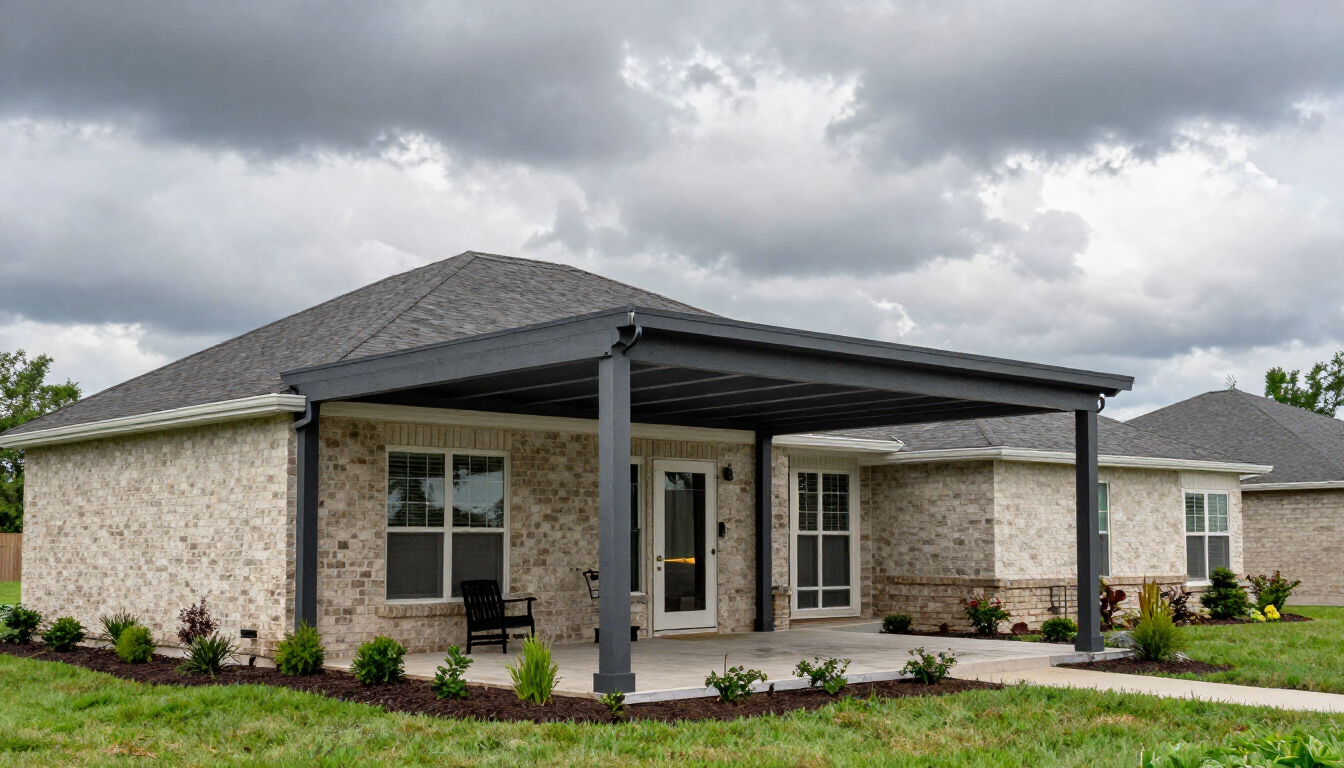
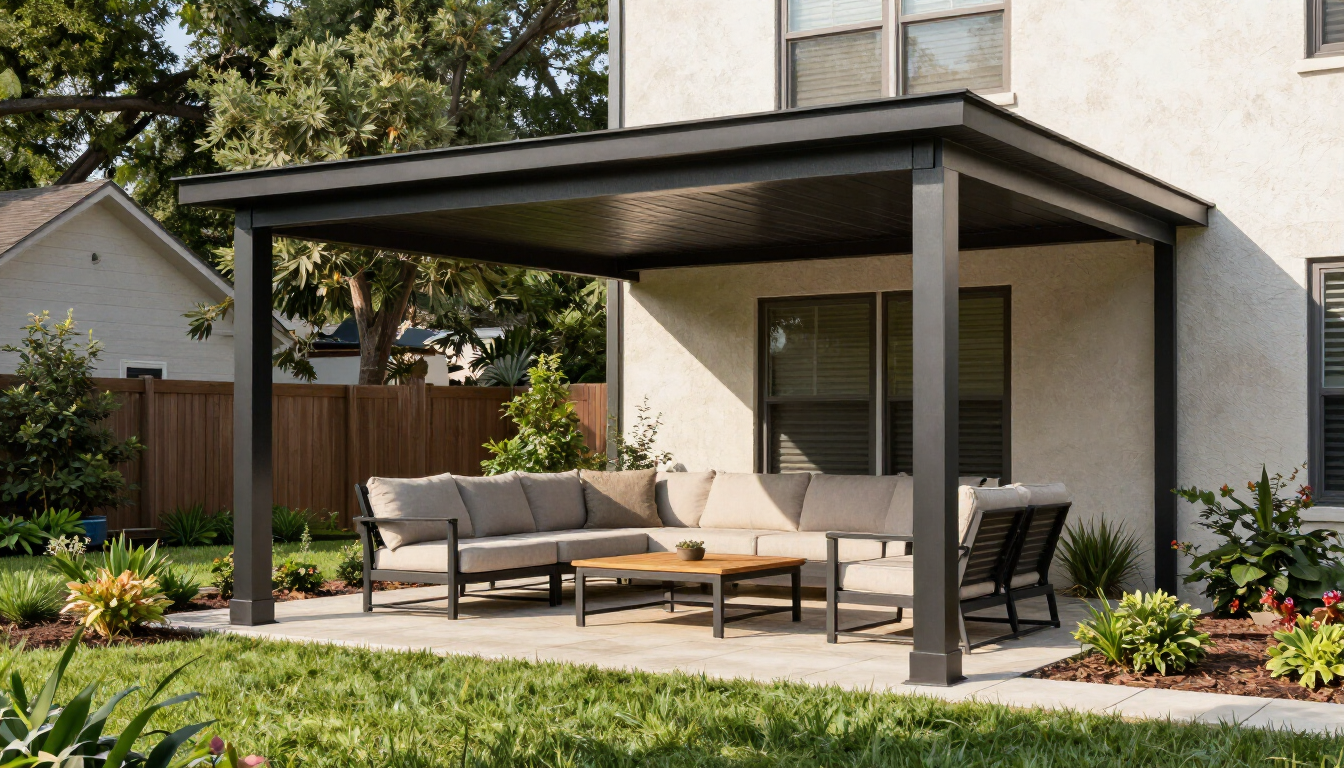
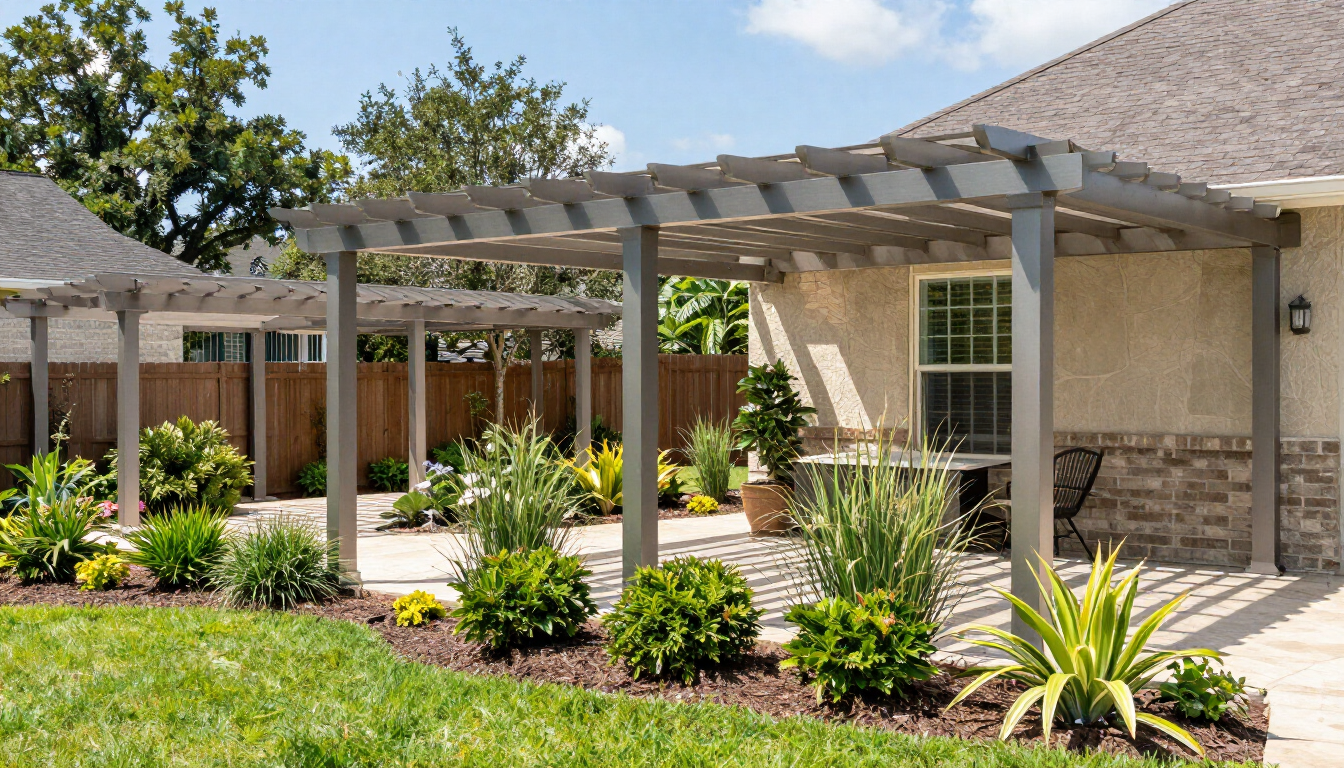
Your flooring decision should also support the larger patio plan. If you are considering a new aluminum patio cover, pergola, or patio enclosure, select the floor finish and layout before construction begins.
1. Broom-finished concrete
Broom-finished concrete is a classic, budget-friendly option. After the concrete is poured and leveled, a broom is pulled across the surface to create fine grooves. These grooves add texture and help improve traction, especially around outdoor kitchens, pools, and areas exposed to rain.
Best for: Homeowners who want a clean, functional surface at a lower cost.
Advantages:
- Affordable compared with decorative finishes
- Naturally slip-resistant
- Works with nearly any home style
- Simple to repair or extend later
The tradeoff is that broom-finished concrete has a straightforward appearance. It can still look polished when paired with attractive furniture, landscaping, lighting, and an aluminum patio cover.
2. Stamped concrete
Stamped concrete is designed to resemble materials such as natural stone, slate, brick, or wood planks. Decorative mats are pressed into the concrete while it is still workable, creating a patterned surface with color and texture.
Best for: Homeowners who want the look of premium materials without installing individual stones or pavers.
Stamped concrete can create a strong visual foundation for a covered patio or outdoor entertaining area. Popular patterns include ashlar slate, running bond brick, flagstone, and wood grain.
However, installation quality matters. Patterns must be aligned carefully, control joints should be planned thoughtfully, and the surface needs periodic resealing. Deep textures can also make furniture slightly less stable than it would be on smooth concrete.
3. Stained concrete
Stained concrete uses a penetrating stain or topical color to change the appearance of the slab. Acid stains often create natural variation, while water-based stains offer a broader range of consistent colors.
Best for: Existing patios that are structurally sound but need a visual refresh.
Staining can produce warm tones such as tan, brown, terracotta, or charcoal. It may be used alone or combined with scoring, borders, or decorative patterns. Because the stain becomes part of the surface rather than forming a thick layer, it can provide a natural-looking finish.
Color results vary according to the age, porosity, and previous treatment of the concrete. Always test a small area first, and use a suitable sealer to protect the finish from moisture, stains, and sun exposure.
4. Exposed aggregate concrete
Exposed aggregate concrete reveals decorative stones in the top layer of the slab. The aggregate may include rounded river rock, crushed stone, or specially selected colored materials.
Best for: Patios where texture, visual interest, and slip resistance are priorities.
This finish has a distinctive, natural appearance and can complement stone accents, landscaping, or a rustic outdoor design. The textured surface can also provide more traction than smooth concrete.
The main consideration is comfort. Very coarse aggregate may feel rough under bare feet and can make sweeping more difficult. Choose the aggregate carefully if your patio will be used around a pool, hot tub, or children’s play area.
5. Decorative overlays
A decorative concrete overlay applies a thin cement-based material over an existing slab. It can add color, texture, or a stamped pattern without removing the entire patio.
Best for: Sound concrete that has surface-level discoloration, minor wear, or an outdated appearance.
Overlays are not a solution for every problem. They cannot reliably correct major settlement, unstable sections, serious cracking, or drainage failures. The existing slab must be evaluated and prepared properly before an overlay is installed.
When the foundation is suitable, an overlay may be a practical way to update a patio while coordinating it with a new pergola or screen room.
6. Polished or smooth concrete
Smooth and polished concrete creates a clean, contemporary look. It works especially well with modern architecture, minimalist furniture, and structured landscaping.
Best for: Covered patios where appearance and easy sweeping are important.
A smooth finish is comfortable underfoot and gives furniture a stable base. It can also make a smaller patio feel more open. However, smooth concrete may become slippery when wet, particularly if it has a glossy sealer. For an uncovered patio or a space near water, ask about adding a texture or slip-resistant treatment.
Polished concrete also requires careful attention to drainage. Water should move away from the home instead of pooling on the surface.
7. Concrete pavers and modular sections
Although poured concrete is a single slab, concrete pavers provide another concrete-based flooring approach. Pavers are manufactured in individual pieces and installed over a prepared base.
Best for: Homeowners who want pattern flexibility, replaceable sections, or a paver-like appearance.
Pavers can be arranged in running bond, basket weave, herringbone, or other patterns. If one section becomes damaged, it may be possible to replace that piece instead of repairing an entire slab.
The base preparation is critical. Poor compaction can lead to shifting, uneven joints, or low spots where water collects. Weeds may also grow between joints unless the area is installed and maintained properly.
Which finish is easiest to maintain?
Most concrete patio finishes are manageable when they are installed correctly and maintained on a regular schedule. Maintenance usually includes sweeping, rinsing, cleaning spills promptly, and resealing decorative surfaces as recommended.
A practical comparison looks like this:
- Lowest maintenance: Broom-finished concrete
- Best visual variety: Stamped or stained concrete
- Most natural texture: Exposed aggregate
- Best for updating an existing slab: Decorative overlay
- Best for individual replacement: Concrete pavers
Sealers can help protect color and reduce water absorption, but they are not permanent. Houston’s heat, humidity, heavy rain, and occasional freezing temperatures can affect exterior surfaces over time. Ask which sealer is appropriate for the finish and exposure level.
How should Houston homeowners plan patio flooring?
Houston-area patios need more than an attractive finish. Drainage, soil movement, heat, humidity, and stormwater should all be considered during planning. A professional should evaluate the slope, existing slab, expansion joints, nearby foundation, and planned roof or enclosure structure.
Keep these planning points in mind:
- Plan drainage first. The patio should direct water away from the home and avoid creating puddles near posts or walls.
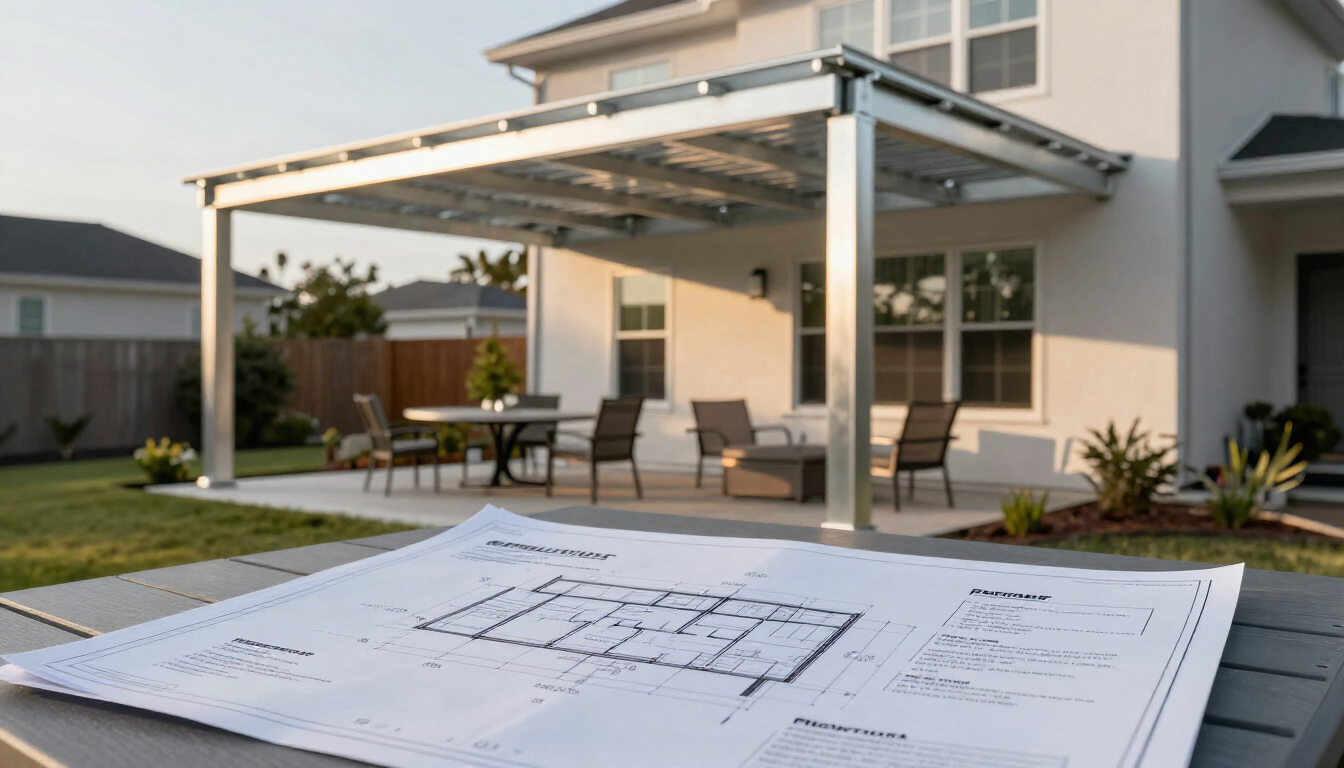
- Coordinate structural work. A patio cover, pergola, or enclosure may require properly located footings and attachment points.
- Account for expansion. Control and expansion joints help manage normal movement and reduce random cracking.
- Choose texture for safety. Extra traction is helpful in areas exposed to rain, sprinklers, or pool water.
- Match the home. Use colors and patterns that complement the siding, brick, roof, trim, and landscaping.
For examples of completed outdoor spaces, browse the company’s projects or pergola photos before choosing a design direction.
Common mistakes to avoid
The most expensive flooring problems often begin before the concrete is poured. Avoid selecting a finish based only on a small sample, and do not assume a decorative surface will correct an unstable foundation.
Other common mistakes include:
- Ignoring how furniture legs will sit on a deeply textured surface
- Choosing a glossy sealer without considering wet-weather traction
- Failing to plan drainage around the home
- Installing a cover or enclosure without coordinating footings
- Skipping maintenance and waiting until stains or cracks become severe
A short planning conversation with an experienced contractor can help you identify these issues early.
How much do patio concrete flooring options cost?
Pricing varies by slab size, site preparation, access, drainage work, reinforcement, finish, color, sealing, and local labor. A basic broom finish generally costs less than stamped concrete, intricate borders, overlays, or premium pavers.
Instead of comparing only the price per square foot, request an itemized estimate that explains:
- Demolition or excavation
- Base preparation and reinforcement
- Concrete thickness and mix
- Pattern, color, or texture
- Control joints and drainage
- Sealer and expected maintenance
This makes it easier to compare estimates fairly and understand what is included. You can also review the available patio cover services if the flooring project is part of a larger outdoor living upgrade.
Choosing the right finish
The best patio concrete flooring option is the one that balances appearance, safety, durability, maintenance, and budget. Broom-finished concrete is a dependable value, while stamped and stained finishes provide more design flexibility. Exposed aggregate adds texture, overlays can refresh suitable slabs, and pavers offer modular repair options.
For Houston homeowners, start by evaluating drainage and the condition of the existing surface. Then decide how the patio will be used and whether a cover, pergola, or enclosure will be added. Compare written estimates, review examples, and choose a finish that supports the entire outdoor living plan—not just the floor.
If you are ready to discuss your space, contact Lone Star Patio Covers & Enclosures for help planning a durable, comfortable patio environment.